
Sun exposure is the leading cause of premature flooring failure in residential spaces, driving fading, warping, and surface heat buildup through three distinct mechanisms: UV radiation, infrared heat, and visible light. The role of sun exposure in flooring choice goes far beyond aesthetics. Rooms with six or more hours of direct sunlight show measurable hardwood fading within 12–18 months if unprotected. Sunrooms, south-facing living rooms, and west-facing kitchens are the most vulnerable spaces in any home. Choosing the right material from the start protects both your investment and your home’s appearance for years.
Flooring fading is a combined chemical and physical process, not a single event. UV radiation accounts for roughly 40% of total floor damage by breaking down pigment molecules in stains, dyes, and surface coatings. That number surprises most homeowners who assume UV is the only threat.
Infrared heat accounts for approximately 25% of damage by physically stressing flooring layers. Heat causes wood fibers to expand and contract repeatedly, leading to warping, cupping, and buckling over time. Visible light contributes another 25% of fading, meaning floors continue to lose color even after UV is filtered out. That last point is the one most designers miss.
Here is how the most common flooring materials respond to sustained sun exposure:
| Flooring type | Fading risk | Warping risk | Heat buildup |
|---|---|---|---|
| Solid hardwood | High | High | Moderate |
| Engineered hardwood | Moderate | Low | Moderate |
| Luxury vinyl plank | Low | Low to moderate | Moderate |
| Laminate | Moderate | Low | Low |
| Porcelain tile | Very low | None | High (dark tones) |
| Carpet | High | None | Low |
Pro Tip: Place a flooring sample in your sunniest window for 48 hours before purchasing. You will see surface temperature differences and early color shifts that a showroom floor never reveals.
Porcelain tile is the strongest performer in high-sun environments. It does not warp or fade under any residential sun load, and light tones like cream or ivory stay noticeably cooler underfoot during peak afternoon hours. For sunrooms, pool decks, and south-facing great rooms, porcelain tile options are the most reliable long-term choice.
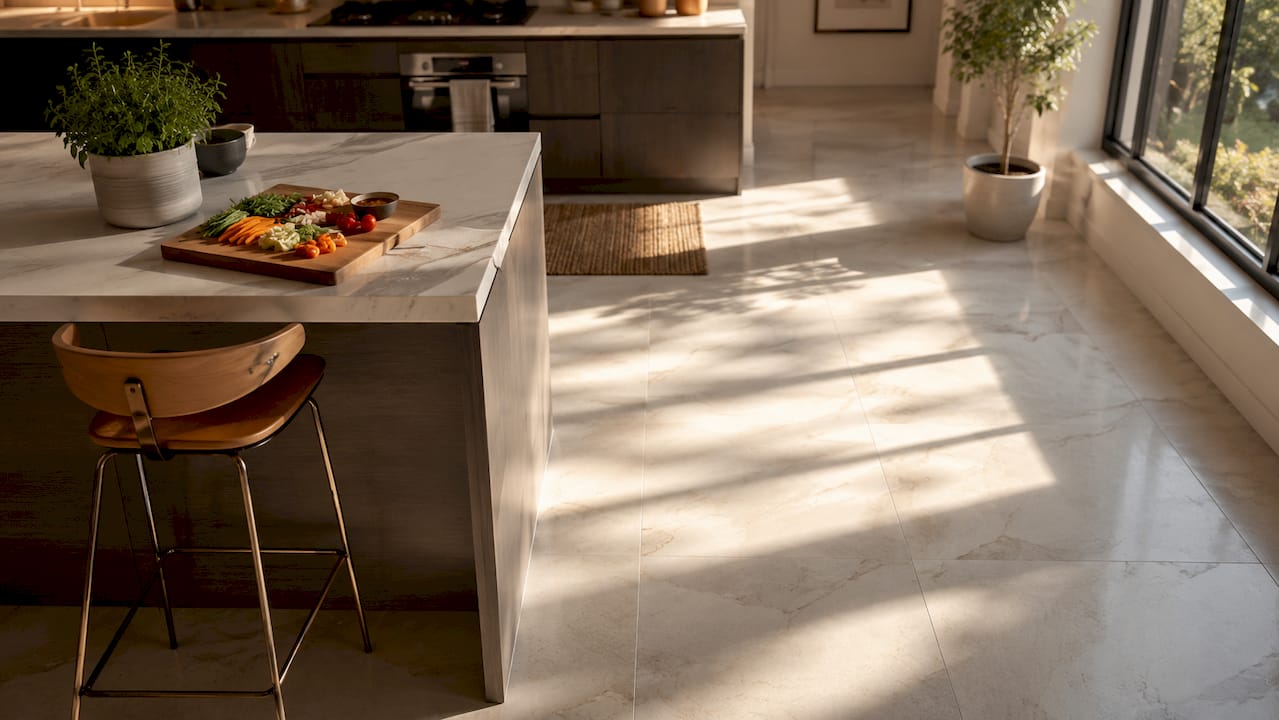
Engineered hardwood sits in a practical middle ground. It handles sun and humidity stress better than solid wood because its cross-layered construction resists expansion and contraction. That said, engineered hardwood still requires controlled environments in full-sun sunrooms. Pairing it with window film or exterior shading extends its lifespan considerably. For homeowners who want the warmth of wood in a bright room, engineered hardwood flooring is a smarter pick than solid planks.

UV-resistant luxury vinyl plank delivers the look of wood without wood’s structural vulnerabilities. Modern LVP products carry wear layers rated for light stability, and many meet the ASTM F1515 standard for resilient flooring color retention. ASTM F1515 uses xenon arc lamp testing to simulate solar exposure, and a color change score of ΔE ≤ 8 indicates acceptable light stability. Products that pass this threshold hold their color far longer in sunny rooms. You can browse UV-resistant LVP options to find products rated for bright spaces.
Carpet and laminate are the weakest choices for sun-heavy rooms. Carpet fibers bleach unevenly, creating patchy discoloration that no amount of cleaning corrects. Laminate’s photographic surface layer fades faster than engineered wood veneer under the same light load.
Key factors to weigh when choosing flooring for bright rooms:
The most effective single intervention is professional window film installation. Quality window films block up to 99% of UV radiation and up to 79% of solar heat. That combination addresses the two largest contributors to floor degradation without blocking natural light or altering your view. Films work best on south-facing and west-facing windows, where solar intensity peaks in the afternoon.
Here is a practical protection plan for any sun-exposed room:
Pro Tip: Window film is not a permanent fix for a poor material choice. If your room gets six or more hours of direct sun daily, start with the right flooring material first, then add film as a secondary layer of protection.
Shading solutions like exterior awnings, solar shades, and plantation shutters reduce solar load before it reaches the glass. They work well alongside window film rather than as a replacement for it.
Floor color is a passive climate control tool that most homeowners underuse. Dark-colored floors absorb significantly more heat than light tones, and surface temperature differences between light and dark floors in midday sun can exceed 50°F. That gap directly raises your cooling load and makes barefoot comfort nearly impossible in summer months.
Light-toned floors reflect solar radiation back into the room rather than storing it in the surface layer. Cream, ivory, and pale gray tones stay comfortable underfoot even in south-facing rooms during peak sun hours. This is not just a comfort issue. Higher floor surface temperatures accelerate adhesive breakdown, grout cracking, and finish degradation over time.
Surface texture plays a supporting role in both aesthetics and comfort. Matte and lightly textured surfaces scatter incoming light, which reduces glare and makes color shifts from fading less visible. High-gloss finishes look striking in showrooms but reveal every scratch, fade patch, and heat mark in a sun-drenched room. For bright spaces, a satin or matte finish is the more practical choice.
Design considerations for sun-exposed rooms:
Sun exposure degrades flooring through UV radiation, infrared heat, and visible light acting together, so material selection, color choice, and protective measures must all address each factor.
| Point | Details |
|---|---|
| UV is not the only threat | Visible light and infrared heat each cause significant fading and warping beyond UV alone. |
| Porcelain tile leads in durability | It resists fading and warping completely, making it the top choice for sunrooms and high-sun spaces. |
| ASTM F1515 is the benchmark | Choose resilient flooring with a ΔE ≤ 8 score to confirm real-world light stability. |
| Light colors reduce heat buildup | Surface temperature differences between light and dark floors can exceed 50°F under direct sun. |
| Window film is a high-return investment | Professional film blocks up to 99% of UV and 79% of solar heat without sacrificing natural light. |
Most flooring failures in sun-exposed spaces come down to one mistake: treating UV as the only problem. Homeowners install UV-blocking film, feel protected, and then watch their floors fade anyway. Visible light and infrared heat keep working after UV is filtered out. That is not a flaw in the film. It is a physics reality that the flooring industry does not communicate clearly enough.
The second mistake I see constantly is ignoring window orientation during the design phase. A north-facing room and a west-facing room are completely different environments. West-facing rooms take the hardest afternoon sun, often for four or more hours straight. Choosing the same flooring for both without accounting for that difference is a costly oversight.
Geographic climate matters just as much as orientation. In a humid climate like Jacksonville, Florida, the combination of heat, UV, and moisture fluctuation puts enormous stress on solid hardwood and lower-grade laminate. Engineered products and porcelain tile handle that combination far better. Matching your material to your actual climate, not just your design preference, is the decision that separates floors that last from floors that disappoint.
My honest recommendation: bring flooring samples home, place them in your sunniest spot for a week, and walk on them barefoot at 2 p.m. That single test tells you more than any spec sheet.
— Anna
The Kitchen, Bathroom & Flooring Store carries a full range of flooring options built for Jacksonville’s sun-heavy climate, including UV-resistant luxury vinyl plank, engineered hardwood, porcelain tile, and laminate. Every product selection comes with personalized design consultation so you choose the right material for your specific room orientation and sun load.
Our team handles everything from material selection through professional installation, with no need to coordinate separate contractors. Whether you are updating a sunroom, a bright kitchen, or a west-facing living room, we match you with materials that hold up. Visit our Jacksonville showroom or ask about our flooring remodeling packages to get started with a plan built around your home’s actual sun exposure.
Yes. Sunlight damages floors through UV radiation, infrared heat, and visible light, each contributing to fading, warping, or surface degradation. Rooms with six or more hours of direct sun show measurable hardwood fading within 12–18 months without protection.
Porcelain tile is the top-rated material for UV stability and heat resistance in high-sun environments. UV-resistant luxury vinyl plank is the best wood-look alternative for rooms that receive heavy direct sunlight.
ASTM F1515 is the industry standard for testing light stability in resilient flooring using xenon arc lamp simulation. A color change score of ΔE ≤ 8 indicates the flooring holds its color under sustained solar exposure.
Window film blocks up to 99% of UV radiation and up to 79% of solar heat, but visible light still causes fading. Film is a strong protective layer, not a complete solution on its own.
Light-toned floors reflect solar radiation and stay cooler underfoot. Surface temperature differences between light and dark floors in direct midday sun can exceed 50°F, directly affecting barefoot comfort and indoor cooling demand.