
A single contractor managing both your kitchen and bathroom remodel is the most efficient way to renovate two rooms at once. In the industry, this approach is called a unified general contracting model, where one licensed professional oversees all subcontractors, permits, and timelines across both spaces. This single contractor kitchen bathroom guide covers how to vet the right contractor, prepare your home and budget, manage the renovation process, and avoid the mistakes that derail most dual remodels. The result is less stress, fewer scheduling conflicts, and a finished home that looks and feels cohesive.
The most important decision in any dual remodel is choosing a contractor with proven experience in both spaces. Not all general contractors are equally qualified. Only 12% of kitchen contractors hold professional certifications like NKBA (National Kitchen and Bath Association) or NARI (National Association of the Remodeling Industry). That gap matters because certified contractors have demonstrated knowledge of layout standards, ventilation codes, and plumbing sequencing specific to kitchens and bathrooms.
When reviewing candidates, ask to see portfolios that include multi-room renovations. A contractor who has only done standalone kitchen work may not understand how bathroom plumbing walls interact with kitchen drain lines. References from homeowners who completed similar dual projects are more valuable than general testimonials.
Key qualifications to verify before signing:
Active state license and general liability insurance (ask for certificates, not just verbal confirmation)
NKBA or NARI certification, or equivalent documented training
Portfolio showing at least two completed kitchen and bathroom projects together
Clear communication style, including written updates and a defined point of contact
Willingness to provide a detailed, itemized bid
Detailed, itemized bids and written contracts describing every project element clearly prevent disputes before they start. A vague estimate like “kitchen demo and install: $15,000” gives you no protection if the scope expands. Every line item, from kitchen cabinet installation to tile work, should be spelled out.
Pro Tip: Ask each contractor how they handle subcontractor scheduling conflicts. Their answer tells you more about their project management skills than any portfolio photo.
Homeowners who follow a structured vetting process report 73% higher satisfaction with their remodels. That number reflects how much the selection phase determines the outcome of the entire project.

Preparation is where most homeowners lose money and time. Getting this phase right sets the tone for everything that follows.
Set a combined, realistic budget. Professional services including contracting, design, and architecture account for about 50% of the total kitchen or bathroom remodel budget. Build that into your numbers from day one, not as an afterthought.
Involve your contractor before buying anything. Involving your contractor early helps avoid material mismatches and budget overruns by addressing structural and layout concerns before purchase. Choosing bathroom vanities or countertops without contractor input is one of the most common and costly mistakes homeowners make.
Plan your sequencing carefully. When your kitchen and bathroom share a plumbing wall, the order of demolition matters. Gutting both rooms sharing a plumbing wall without a backup plan can cause 2–4 weeks of alternative living arrangements. Your contractor should map this out before any walls come down.
Combine your permits. Combining permits for kitchen and bathroom remodels reduces inspection visits and scheduling delays. One permit application covering both spaces saves time and often reduces fees.
Prepare for temporary disruptions. You may lose access to your kitchen sink, stove, and one or more bathrooms simultaneously. Plan for a temporary kitchen setup and confirm with your contractor which bathroom stays functional during each phase.
Pro Tip: Ask your contractor to walk through the home with you before work begins and mark which walls, fixtures, and systems are shared between the two rooms. That 30-minute walkthrough can prevent a two-week delay.
About 20% of kitchen remodels involve a designer or architect. If your project includes a layout change, that investment pays for itself by catching problems before demolition starts.
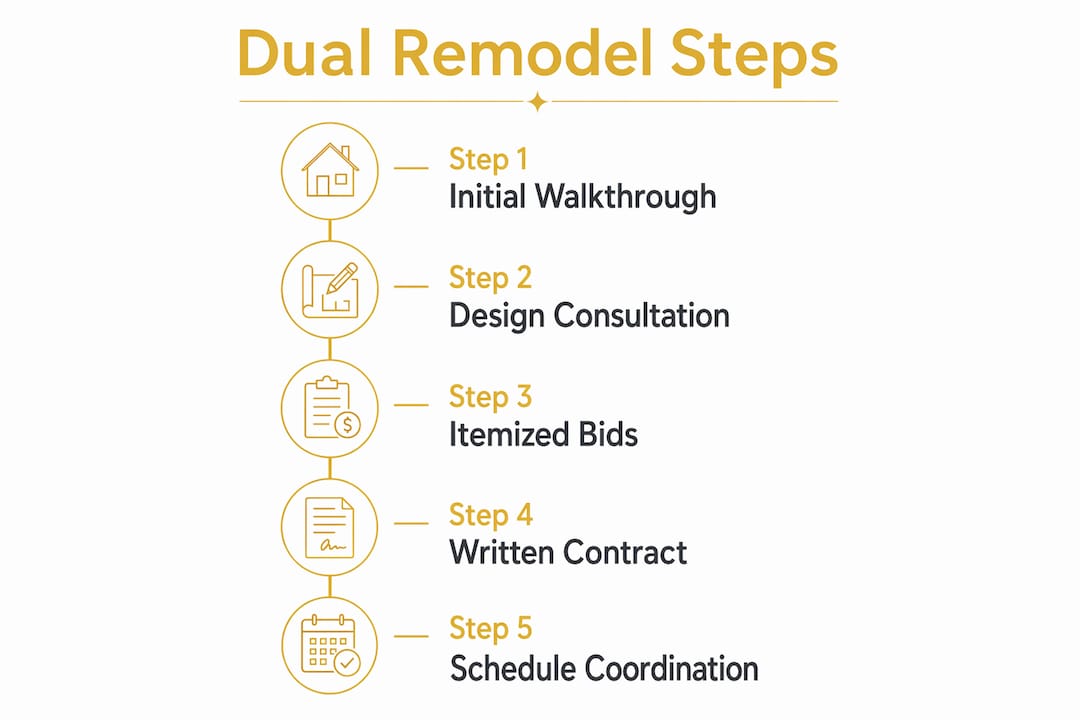
Contractors managing both kitchen and bathroom together provide unified project management, a single communication point, and coordinated scheduling. That structure is the core advantage of the unified model. Without it, you are personally coordinating between a kitchen contractor, a separate bathroom contractor, two sets of plumbers, and two sets of electricians.
The execution phases of a dual remodel follow a predictable pattern:
| Phase | Kitchen | Bathroom |
|---|---|---|
| Demolition | Cabinets, countertops, flooring removed | Fixtures, tile, vanity removed |
| Rough work | Electrical, plumbing, HVAC updated | Plumbing, electrical, waterproofing |
| Installation | Cabinets, countertops, backsplash tile | Shower/tub, vanity, tile |
| Finishing | Appliances, hardware, paint | Fixtures, mirrors, accessories |
| Final inspection | Punch list and sign-off | Punch list and sign-off |
What to monitor during execution:
Subcontractor overlap: electricians and plumbers often need access to the same walls in both rooms. Your contractor should schedule these trades so they do not block each other.
Milestone-based payments: general contractors structure payment schedules based on milestones and advise avoiding deposits over 10–15%. Never pay a large lump sum before work begins.
Weekly site visits: walk through both rooms with your contractor at least once a week. You will catch issues like a misaligned bathroom tile layout before the grout sets.
Written change orders: any scope change, no matter how small, should be documented and priced before work continues.
Clear communication and responsiveness from your contractor is the single most consistent factor in successful remodels. Set a communication rhythm at the start, whether that is daily texts or weekly calls, and stick to it.
The most expensive mistakes in dual remodels are avoidable. Most come from rushing decisions or skipping steps that feel like formalities.
Gutting both rooms at once without a plan. If your kitchen and bathroom share plumbing, simultaneous demolition can leave your household without running water for days. Sequence the work so at least one functional space remains accessible.
Accepting vague contract language. Phrases like “allowances for materials” or “as needed” in a contract give the contractor flexibility at your expense. Every material, brand, and finish should be named.
Paying too much upfront. Deposits beyond 10–15% of the total project cost are a red flag. Legitimate contractors tie payments to completed milestones, not calendar dates.
Ignoring scope creep. Small additions add up fast. A new outlet here, an extra tile pattern there, and suddenly your budget is 20% over. Approve every change in writing before it happens.
Expecting no disruptions. Dual remodels compress timelines, but they do not eliminate disruption. Dual renovations should balance compressed timelines with realistic expectations about temporary lifestyle disruptions.
“The homeowners who have the smoothest remodels are the ones who asked the most questions before signing anything. They knew what they were getting into, and they held their contractor accountable from day one.”
Flexibility matters too. Material delays, permit hold-ups, and subcontractor scheduling changes are normal. Build a two-week buffer into your expected completion date and treat it as a planning tool, not a failure.
Hiring one contractor to manage both your kitchen and bathroom remodel reduces scheduling conflicts, simplifies communication, and gives you stronger budget control from start to finish.
| Point | Details |
|---|---|
| Vet credentials thoroughly | Look for NKBA or NARI certification and a portfolio of completed dual-room projects. |
| Involve the contractor early | Bring your contractor in before buying materials to avoid costly mismatches and layout errors. |
| Use milestone-based payments | Never pay more than 10–15% upfront; tie every payment to a completed phase of work. |
| Sequence demolition carefully | Plan which room gets demolished first, especially when kitchen and bathroom share a plumbing wall. |
| Document every change | Require written change orders for any scope addition before work continues. |
The homeowners who struggle most with combined remodels are not the ones with the tightest budgets. They are the ones who treated the contractor selection as a transaction rather than a partnership. A contractor who communicates well and flags problems early is worth more than one who bids 15% lower and goes quiet mid-project.
One thing I consistently see underestimated is the value of the contractor’s design input. Most homeowners think of the contractor as the person who executes decisions already made. The best contractors catch layout problems, material conflicts, and code issues before they become expensive surprises. Getting them involved before you finalize your kitchen countertop choice or your shower configuration is not just helpful. It is the difference between a remodel that finishes on budget and one that does not.
Realistic timeline expectations also matter more than most guides admit. A dual kitchen and bathroom remodel typically runs 8–12 weeks for a mid-size home. Homeowners who plan for 6 weeks and get 10 feel like something went wrong. Homeowners who plan for 12 weeks and finish in 10 feel like they won. Set your expectations based on the longer end of your contractor’s estimate, and you will be far less stressed throughout the process.
My honest advice: ask your contractor what the most common unexpected cost is in a project like yours. If they answer confidently and specifically, that is a good sign. If they deflect, keep looking.
— Anna
Homeowners in Jacksonville, FL who want a true single-contractor experience have a clear option. The Kitchen, Bathroom & Flooring Store handles kitchen and bathroom renovations from design through installation, with no need to coordinate separate contractors.
The store’s kitchen remodeling packages and bathroom remodeling packages bundle design consultation, product selection, and professional installation under one roof. That structure gives you predictable pricing, a single point of contact, and a team that already knows how your two spaces connect. Financing options are also available for homeowners managing a combined renovation budget. Visit the Jacksonville showroom or request a consultation to get a detailed estimate for your project.
A single contractor manages all trades, permits, and scheduling for both your kitchen and bathroom remodel under one contract. This eliminates the need to coordinate separate contractors for each room.
Check for an active state license, general liability insurance, and certifications from NKBA or NARI. Ask to see completed projects that include both a kitchen and bathroom remodel.
Reputable contractors advise keeping deposits at 10–15% of the total project cost. Payments should be tied to completed milestones, not calendar dates or verbal agreements.
Your contractor should sequence demolition so both rooms are not gutted at the same time. Careful planning prevents extended water shutoffs and keeps at least one functional space available during the remodel.
A mid-size dual remodel typically runs 8–12 weeks depending on scope, material lead times, and permit processing. Build a buffer into your expected completion date to account for normal delays.
Bathroom Remodeling Packages Jacksonville, FL | The Kitchen, Bathroom & Flooring Store
Kitchen Remodeling Packages Jacksonville, FL | The Kitchen, Bathroom & Flooring Store
Bathroom Cabinets Jacksonville, FL | The Kitchen, Bathroom & Flooring Store
Jacksonville Kitchen Cabinet Store | Let Us Help Your Remodel